
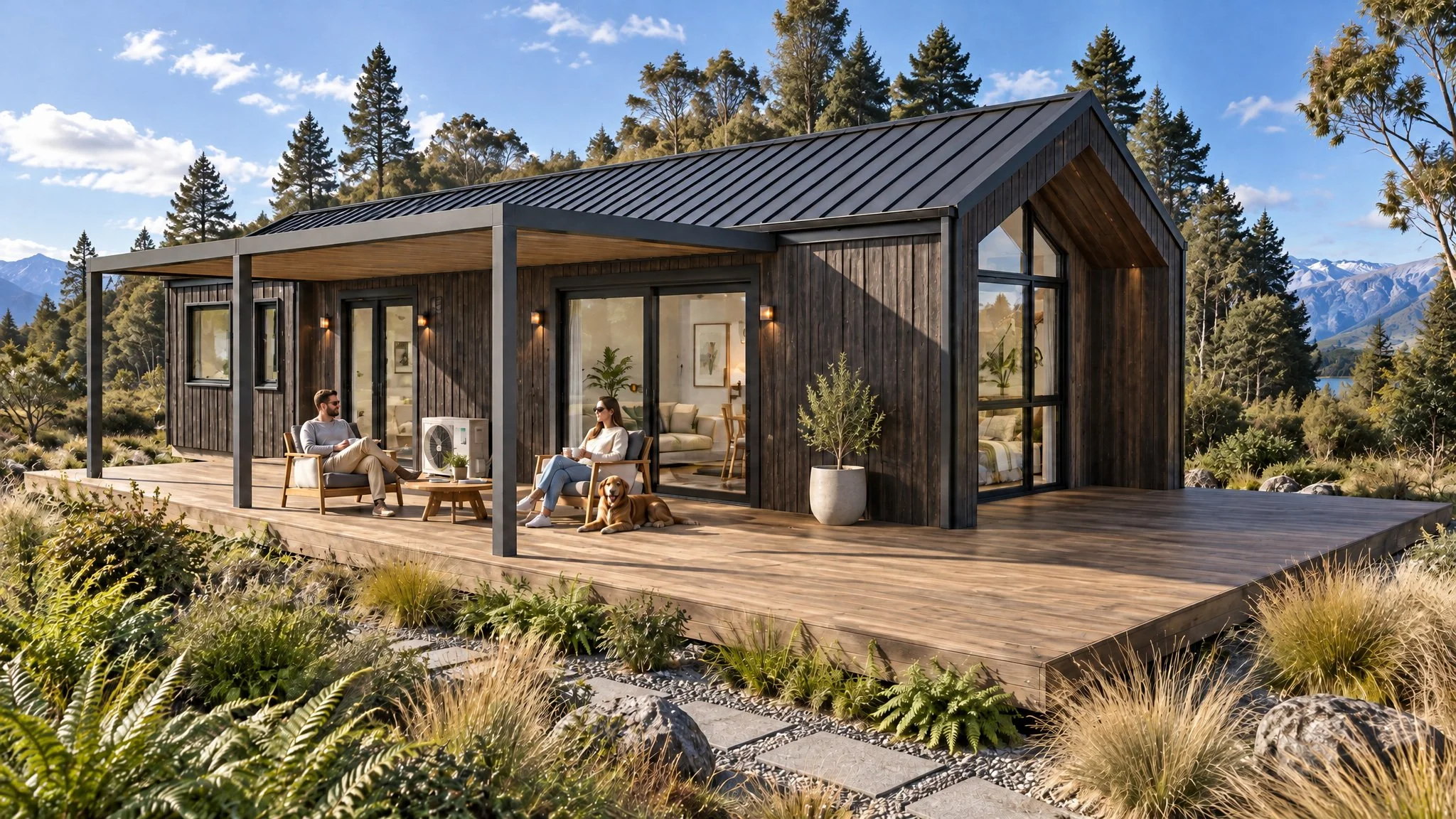
Transportable Homes vs On-Site Build: Which is Right for Your South Island’s Property?
If you're planning a new home in Canterbury/South Island, you're facing a crucial decision: Traditional on-site construction or a transportable home built in a controlled yard environment?
The answer isn't what most builders will tell you. After constructing dozens of Structural Insulated Panels (SIPs) homes in our Christchurch assembly yard, we've seen the real costs, timelines and headaches of both approaches.
This blog breaks down the actual differences - not the marketing fluff - so you can make an informed decision based on your budget, timeline and property situation.
What is a Transportable Home?
A transportable home is a complete dwelling built in a controlled yard environment, then delivered to your prepared foundation site for final installation.
Here's how AlpHouse does it:
Yard Assembly - We construct your entire home in our Christchurch facility using imported SIPs and triple-glazed windows
Quality Control - Every element is installed and inspected before transport (electrical, plumbing, insulation, lining and finishing)
Site Preparation - While we build, your site team prepares the foundation and services
Delivery & Install - We transport the completed home and install it in 1-2 days
Final Connections - Quick hookup to foundation, power, water and waste
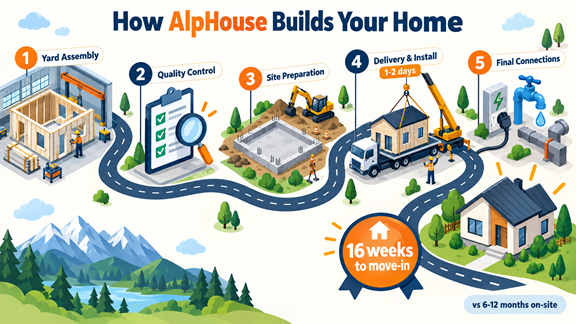
From yard assembly to move-in: the AlpHouse 5-step process
Total time from the start of construction to moving in = 16 weeks vs 6-12 months for on-site builds.
Why Are Christchurch Builders Choosing Yard-Built Homes?
1. Fixed Pricing = Zero Budget Blowouts
The On-Site Reality: Every Christchurch builder knows the drill. Rain delays framing. Wind stops roofing. Your 16-week project stretches to 28 weeks. Labour costs compound. Suddenly you're $40K over budget with no recourse.
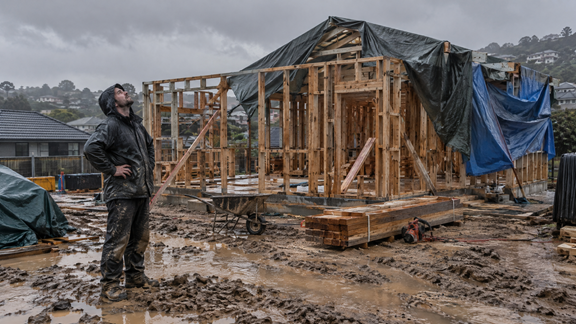
Canterbury weather doesn't care about your build schedule — on-site delays cost real money
The Yard-Built Advantage: Our pricing is ex-factory Christchurch. The ALPmini 70.f (70m² three-bedroom) starts at $329K base, $362K for Summit spec, $398K for Peak spec.
That's the complete home built, finished and delivered. No weather contingency. No timeline creep. No surprise invoices.
Real Cost Comparison:
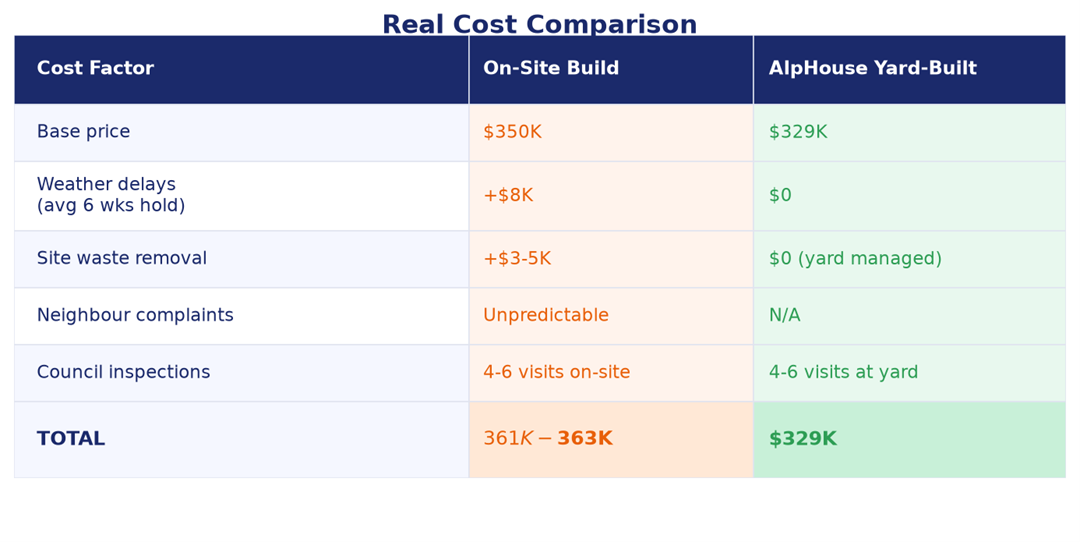
Real cost comparison — fixed pricing advantage of yard-built homes
Savings: $32-34K on a standard 70m² home.
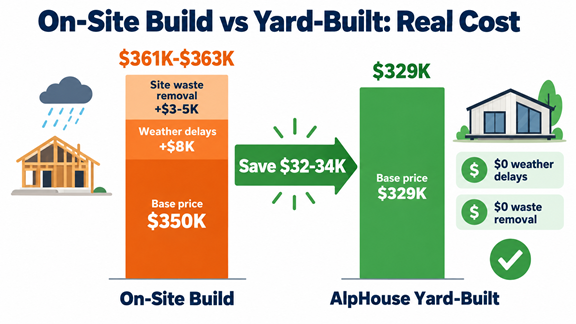
Real cost comparison: on-site build vs AlpHouse yard-built — the numbers speak for themselves
2. Zero On-Site Waste
UN Sustainable Development Goal 12: Responsible consumption and production.
Traditional On-Site Construction:
30-40% of material offcuts go to landfill
Council waste disposal fees ($2-4K)
Environmental impact of site mess
Neighbour complaints about debris
AlpHouse Yard System:
All offcuts sorted and recycled in controlled environment
Zero landfill waste (reuse or proper recycling)
No site mess, no neighbour complaints
Clean foundation-only site prep
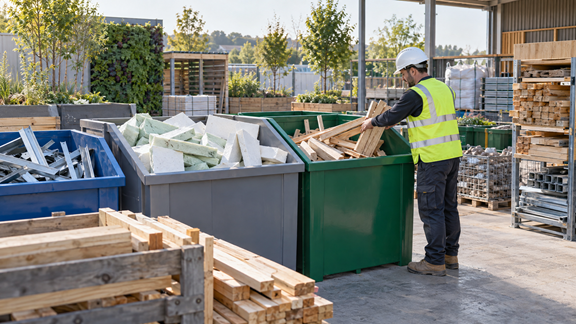
Zero-waste yard operations — every offcut sorted, reused or recycled
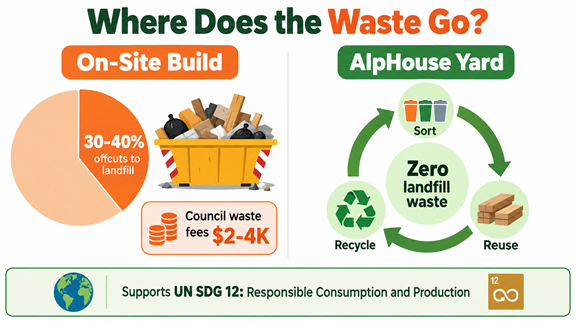
On-site builds send 30–40% of materials to landfill. Our yard sends zero.
One client told us: "Our neighbours didn't even know we were building until the house arrived. No months of noise, no trades vehicles blocking the street, no mess."
3. Quality Control You Can Actually Verify
The On-Site Gamble: Your framing happens on rainy days. Your insulation goes in during wind. Your lining gets installed while your painter is sick. Every trade works around weather, other trades, and site conditions.
You cannot plan your council inspections in advance. You hope your builder is honest.
Yard-Built Certainty: We build your entire home at our yard. You can visit us in Christchurch and see your home under construction. Every connection, every seal, every finish is inspected before transport.
Quality checkpoints:
✅ SIPs airtightness testing (no gaps, no thermal bridges)
✅ Electrical and plumbing pressure tests before lining
✅ Window installation verified (triple-glazed units seated correctly)
✅ Interior finish quality (paint, flooring, fixtures, ventilation system)
Result: Your home performs as designed. No "we'll fix it later" promises. No discovering issues after handover.
4. Speed Without Compromise
Timeline Comparison:
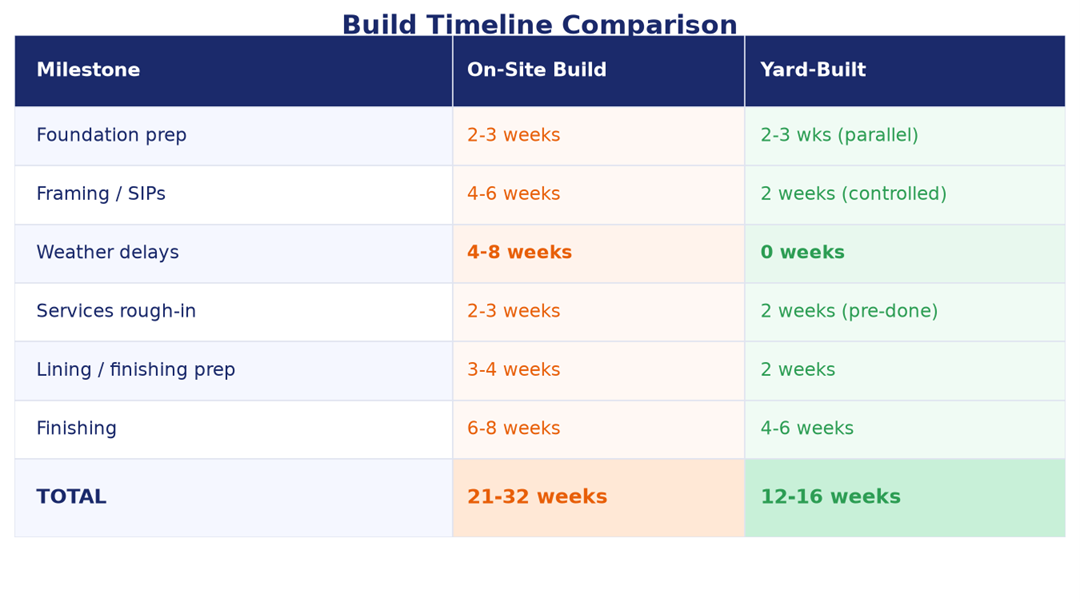
Build timeline: on-site vs yard-built — weeks 0 to 32
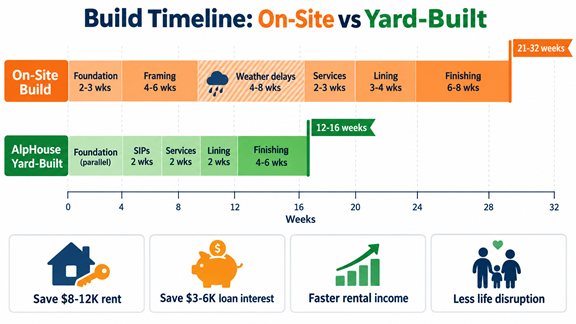
Build timeline comparison: on-site vs yard-built — weeks matter when you're paying rent
Why Does this matter?
Rental costs while building: Save $8-12K in rent
Construction loan interest: Save $3-6K
Faster return on investment if this is a rental property
Less life disruption (especially with kids)
Yard-Built Impact:
Foundation prep: 2-3 weeks (minimal noise)
Delivery day: 1 day (crane operation, secured street)
Final hookup: 1-2 days (electrical, plumbing connections)
Total disruption: Under 4 weeks
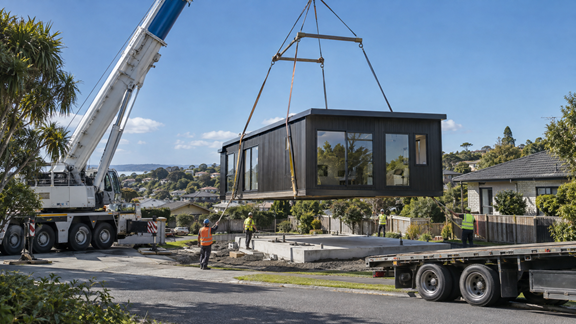
Delivery day: your completed home placed on foundation in under 24 hours
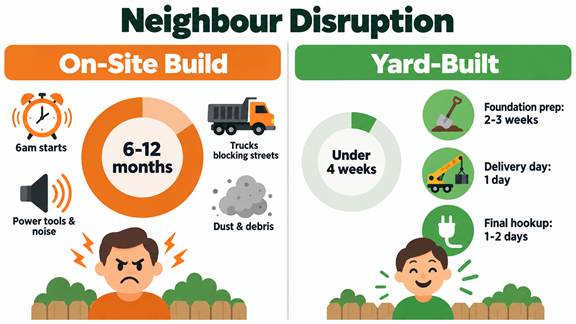
6–12 months of on-site disruption vs under 4 weeks with yard-built — your neighbours will notice the difference
Christchurch/South Islands suburban sections are tight. Your neighbours matter. A yard-built home preserves those relationships.
When Does On-Site Construction Make More Sense?
Be honest with yourself-… yard-built isn't always the answer:
❌ You Should Build On-Site If:
Difficult site access - Narrow driveways, overhead wires, sharp turns that prevent crane/transport delivery
Extreme custom design - curved walls, complex multi-level layouts, architectural features beyond modular capability
Heritage or character match - Specific weatherboard styles, complex roof pitches, strict council heritage requirements
Staged construction budget - You want to DIY portions or stage payments over 12+ months
✅ Yard-Built Works Best For:
Standard residential sections - Flat or moderate slope, standard street access
Fixed budget requirements - Cannot absorb cost overruns
Tight timelines - Need to move in by specific date (rental expiry, school start, job relocation)
Suburban infill - Neighbours close, minimal disruption crucial
Investment properties - Speed to rental income matters
First home buyers - Budget certainty critical
The AlpHouse Difference: Global Engineering, Local Expertise
Here's what most transportable home companies won't tell you:
We import our SIPs and triple-glazed windows from overseas. Why? Because New Zealand's small manufacturing scale creates a 40-60% cost premium for the same performance.
Our model:
Import - SIPs engineered to international standards (superior thermal performance, lower cost)
Assemble - Complete home built in our Christchurch yard (quality control, Christchurch climate expertise)
Install - Local team handles foundation hookup, final connections and warranty service
Result: You get international-grade materials at competitive pricing, with local accountability and ongoing support.
What Does "Ex-Factory Christchurch" Actually Mean?
Our pricing (like the ALPmini 70.f at $329K base) is ex-factory Christchurch. This means:
Included:
✅ Complete home built and finished
✅ GST
✅ Ready for transport from our yard
Excluded (site-specific costs you arrange):
❌ Foundation (your site conditions determine this)
❌ Delivery to your site (distance dependent)
❌ Crane hire for placement
❌ Electrical, plumbing, waste hookups to existing services
Why This Matters: You know exactly what you're paying us. Your site-specific costs are transparent and competitive (you can shop around). No hidden bundling. No markup on services we don't control.
Real Questions from South Islands Homeowners
"Can I visit the yard during construction?"
Yes. We encourage it. Most clients visit 2-3 times during their build-especially at key stages like panel assembly, pre-lining inspection, and final finish check.
"What if something goes wrong after installation?"
We're local. Our Christchurch team handles all warranty work. Unlike offshore-manufactured homes with no local support, you're dealing with the people who built your home.
"How do council consents work?"
Same as on-site builds. We provide engineered plans. Our (architect/agent) submit for building consent. Council inspects foundation prep and final placement. One key difference: The inspections of the building will be done in our yard, hence fewer progress inspections on-site because the home arrives substantially complete.
"What about insurance during transport?"
Fully covered, but it needs to be discussed with the transport company, before you confirm the terms & conditions. The transport insurance protects your home from yard to site. Once placed on foundation, it transfers to your standard homeowner's policy.
Next Steps: Getting Your Fixed-Price Quote
If yard-built suits your situation, here's the process:
Site Assessment - Send us your section details (address, access photos, slope, services; geo-tech, levels)
Design Selection - Choose base model (like ALPmini 70.f) or request custom layout; price will vary depending on upgrades
Specification Level - Base ($329K), Summit (+$33K), or Peak (+$69K)
Fixed Quote - We provide complete pricing: home only
Estimate - For delivery; If Estimate for foundation is required, PS1 by engineer needs to be issued first.
Timeline Locked - Production slot reserved, delivery date confirmed
Contact AlpHouse Christchurch: [Insert contact details - email, phone, office address]
Current lead time: 14-16 weeks from when SIPs and windows are in the factory to the point of delivery
The Verdict: When Speed, Cost, and Quality All Matter
Transportable yard-built homes aren't for everyone. But if you're building in a suburban area, need budget certainty, and value your neighbours' sanity, the numbers don't lie.
You're not sacrificing quality for speed. You're eliminating the chaos that makes on-site builds slow and expensive.
The question isn't… "Can I afford a transportable home?"
The question is… "Can I afford the cost blowouts, delays, and stress of on-site construction?"
For most Christchurch sections, the answer is clear.
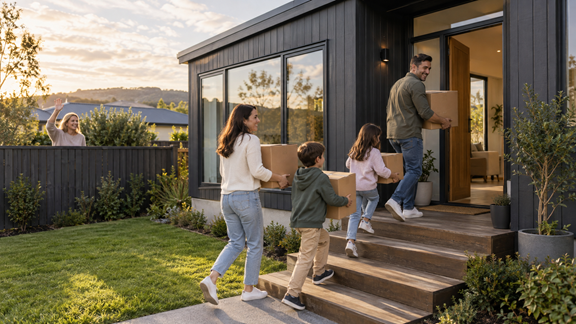
The AlpHouse promise: stress-free move-in, on budget, on time — with great neighbours
Ready to compare your specific situation? Send us your site details and we'll show you the real numbers-transportable vs on-site for YOUR property.
